
Our Healthcare Real Estate Process
A proven approach to site selection, negotiation, and real estate strategy for dentists, veterinarians, and independent healthcare practices.
A traditional broker evaluates a listing: 3,800 square feet, $24 NNN, decent parking, monument signage. We evaluate a different question: can this location support the practice you’re trying to build for the next 10 to 15 years?
Everything below flows from that question. And because Mirlo represents tenants and buyers only — never landlords or sellers — we’re free to answer it honestly. If the building doesn’t serve the practice, we’ll tell you to walk away and keep looking. Nobody here has a listing to fill.

Understand the Practice
Before we look at a single property, we learn the business the real estate has to serve. Your specialty and procedure mix. Whether this is a startup, a relocation, an expansion, or an acquisition with real estate attached. Your ownership goals, budget, and financing picture. How many providers and operatories the plan requires — now and at maturity — and the staffing and growth that follow. A space that fits year one and strangles year seven is a failure we can see coming, so we start with the ten-year vision and size backward from it.
Go Deeper:
“Commercial Real Estate Needs Analysis”
“Should You Start A Practice? Or Buy One?”
“Which Numbers Should A Practice Owner Actually Watch?”

Define the Real Estate Strategy
With the practice understood, the strategy follows: lease or purchase. Existing dental space, a conversion, or ground-up construction. Target geography, size range, timing, and budget — plus the parts most owners skip: the exit strategy and the expansion path. Owning your real estate is one of the strongest wealth-building moves available to an independent practice owner, and we’ll model it honestly against leasing, including the tax treatment. When the answer is a lease, we structure it so it never blocks the sale of your practice.
Go Deeper:
“3 Pillars Of Success In Commercial Real Estate”
“Buying Vs Leasing”
“What Is Cost Segregation — And How Much Tax Can It Save On Your Building?”

Market, Demographics & Competition
A location works when the people around it match the practice you’re building. We work with dental-specific market research partners to read the trade area properly: population and rooftop growth, household incomes and ages, homeownership and stability, referral patterns for specialists, traffic and accessibility. Competition gets counted — and then characterized, because twelve competitors near retirement age are a different market than twelve aggressive startups. The demographic circle on a report is not a site map; connecting the data to real, available properties is exactly where we come in.
Go Deeper:
“How Do You Read A Dental Market? Ratios, Density, and The Character Of Competition”
“How Do You Know If A Location Can Support Your Practice?”
“Exploring The Market”

Healthcare Site Selection
This is where healthcare real estate stops resembling general commercial work. We evaluate parking against real clinical schedules, not just the zoning ordinance. Visibility, signage rights, ADA accessibility, and ingress and egress. Neighboring uses and exclusivity concerns. Zoning and permitted medical use — verified, never assumed. And the building systems a practice lives or dies on: electrical capacity for imaging, plumbing for operatories, HVAC sized for clinical loads, medical gas where applicable, floor loading where it matters. A space that fails these tests is expensive no matter how good the rent looks.
Go Deeper:
“Finding A Workspace That Fits Your Brand”
“How Much Should Rent, Staff, And Marketing Actually Cost Your Practice?”
“Making The Most Of Property Tours”

Workflow & Patient Experience
Real estate decisions become clinical decisions the day you open. Patient arrival, check-in, and reception. Clinical flow and provider circulation. Treatment rooms, sterilization, imaging, lab space, private consultation. Staff areas your team will spend more waking hours in than their own homes. Checkout, and the shelled space your future expansion will need. We’re not the architect — but we know which real estate characteristics let a dental architect create the practice you actually want, and we screen for them before you fall in love with a floor plan that can’t deliver.
Go Deeper:
“Why Do Patients Say Yes To Treatment?”
“Commercial Space Design Tips”
“What Is Design-Build?”

Build the Right Team
No healthcare project succeeds with a broker alone. The strongest projects we’ve been part of shared one trait: the team was assembled early — lender, architect, attorney, contractor, equipment supplier, IT, CPA, demographics, and marketing — instead of at the eleventh hour. We’ve spent years building relationships with the specialists who serve independent practices, and we make the introductions at the moment each one’s expertise is needed. Many of them are voices you can hear on our Dentelligentsia podcast, where we interview the experts our clients rely on.
Go Deeper:
“Key Team Members in Commercial Real Estate Transactions”
“What Should Your Overhead Actually Be?”
“Never Call The Name On The Sign – And Other Lease Lessons From A Dental Lawyer”

Create Leverage & Negotiate
Terms follow alternatives. We develop multiple viable options and make landlords compete for your tenancy — the same way your lenders compete for your loan — because a landlord who knows you can walk writes a different deal. Then we negotiate everything that decides what the space really costs and what your practice is worth later: rent and escalations, tenant improvement allowance, free rent, operating expenses, delivery condition, signage, exclusivity, personal guaranty limits, renewal options, expansion rights — and the assignment and subletting language that protects the eventual sale of your practice. The hardest terms go in the letter of intent, where they’re winnable.
Go Deeper:
“Commercial Lease Concessions Explained”
“What Should You Negotiate In A Dental Office Lease?”
“Commercial Real Estate Lease Negotiation Questions”

Due Diligence Through Opening
A signed deal is the midpoint, not the finish line. We stay through zoning and use verification, lease and legal review with your attorney, inspections, construction feasibility, financing milestones, and permitting. We track the critical dates — delivery, buildout, rent commencement, contingencies — and hold landlords to their obligations while your design and construction team builds. The process from first meeting to open doors typically runs nine months to a year; our job is making sure none of those months are wasted and none of the surprises arrive after it’s too late to fix them.
Go Deeper:
“A Dental IT Specialist’s Checklist”
“What Makes An Orthodontic Startup Succeed?”
“Buying Process Checklist”
“Leasing Process Checklist”
Every practice we represent gets the same promise: we evaluate the real estate through the lens of the practice — not the building. If you’re a dentist, veterinarian, or independent healthcare owner anywhere from first idea to lease renewal, the first conversation costs nothing and usually saves the most. Talk to us.
Simplify your path to success.
We only represent commercial tenants and buyers - never landlords or sellers - so there aren’t any conflicts of interest.
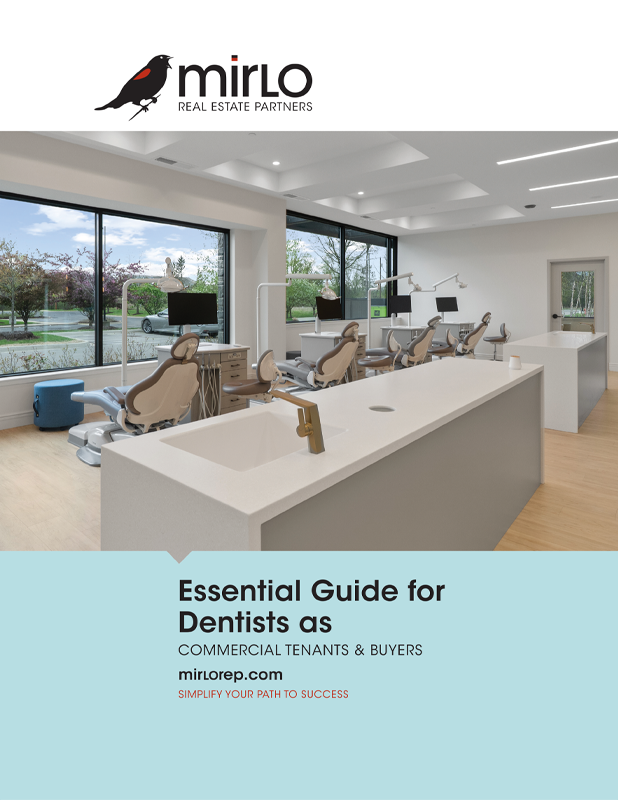
Because well educated tenants and buyers make the best decisions for their businesses, we’ve created this comprehensive guide to help you prepare.
Did you know...
- Real estate is a top expense for any company’s budget.
- A bad deal can cost a business tens to hundreds of thousands of dollars.
- Business owners who do not hire their own agent to represent them are ill-equipped to win the best terms.
- Landlords/sellers pay all commission fees to agents on both sides of the transaction, so you do not pay anything.
With so much at stake and no money to save with DIY real estate, why not hire an agent to fight for you?